

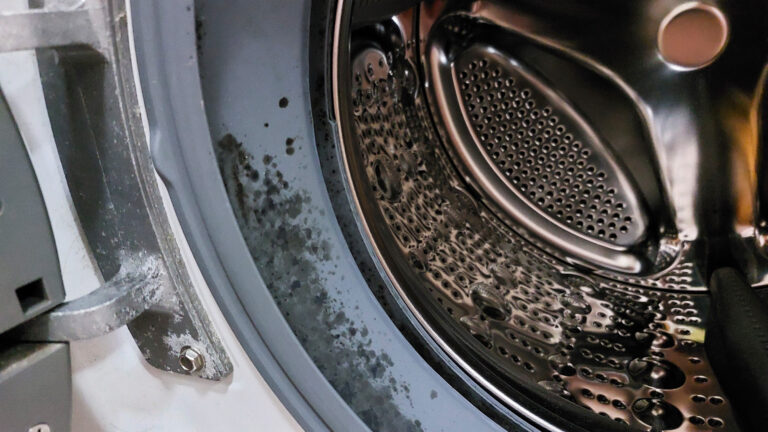
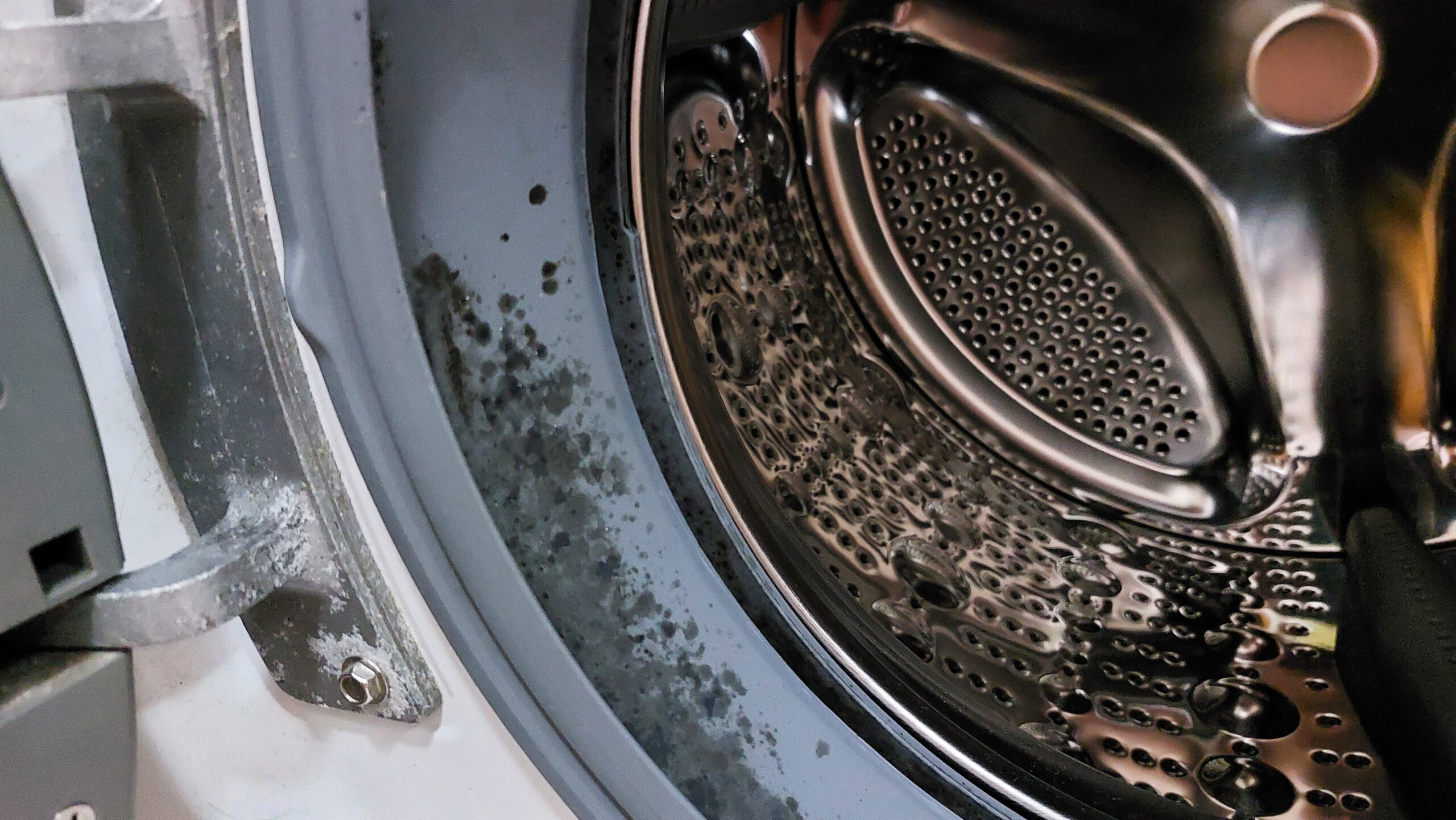
Your laundry room may be one of the last places you expect to find mold. Especially since the primary function of your washer and dryer is to scrub and sanitize your clothes, sheets, towels, and even soft children’s toys so they come out free of dirt and smelling fresh and clean again.
But the truth is not so spotless.
Two of mold’s favorite things are found in abundance in every household laundry room—which means you may have a mold problem and not even know it.
Why laundry rooms attract mold
A few key conditions are needed for airborne mold spores to collect and flourish on indoor surfaces, and chief among them is moisture.
Obviously, moisture is in abundance in a room dedicated to washing. The lingering dampness created by frequent laundry cycles sets the stage for moisture to get trapped inside drain hoses, inside your dryer vent system, in the many working parts of your washing machine and dryer, and in the spaces behind and around your appliances. And because most laundry rooms lack efficient ventilation, moisture buildup is common.
Mold also needs a food source, which can be any type of organic material. And guess what? Everyday dirt, dust, lint, and grime are highly nutritious to mold, along with the soap residue commonly left behind after the washing cycle.
Finally, most mold species prefer dark spaces and a warm environment, making laundry rooms the ideal place for mold to settle in and thrive. When that happens, immediate mold removal becomes a priority. That’s because mold grows quickly, and the last thing you want is for that mold to spread from the laundry room to other areas of your home—making a big problem even bigger (and more costly).
5 tips for laundry room mold prevention
Preventing mold growth in your Connecticut home requires ongoing diligence, and your laundry room is no exception. Be smart and follow these five simple tips for mold prevention.
- Clean and maintain your appliances. This includes cleaning your dryer vents regularly to remove accumulated lint and debris, wiping down interior and exterior surfaces after use (including the washing machine door seal), and frequently checking all hoses and connection points for leaks or compromised seals.
- Control indoor humidity. Check existing air vents to make sure there are no blockages, and install additional vents as needed. You may also want to consider installing an exhaust fan that vents directly to the outdoors and using a dehumidifier to maintain optimal indoor humidity levels. Leaving your washing machine lid open between washes to help it dry out is another way to prevent excess humidity.
- Keep up with your laundry. Piles of dirty clothes and damp towels attract mold, so try to do your laundry as often as possible instead of letting it accumulate on the floor of your laundry room (especially if your laundry room is in the basement). Avoid overloading the washing machine, and transfer wet items to the dryer immediately once the washer cycle is complete.
- Resolve water damage quickly. Laundry rooms are notorious for water damage. Leaks and pooling water can be caused by overloading, clogged drain lines, worn supply hoses, loose fittings, and other appliance-related issues. Repair leaks immediately (even small ones) and dry all affected areas completely to prevent mold growth from water damage.
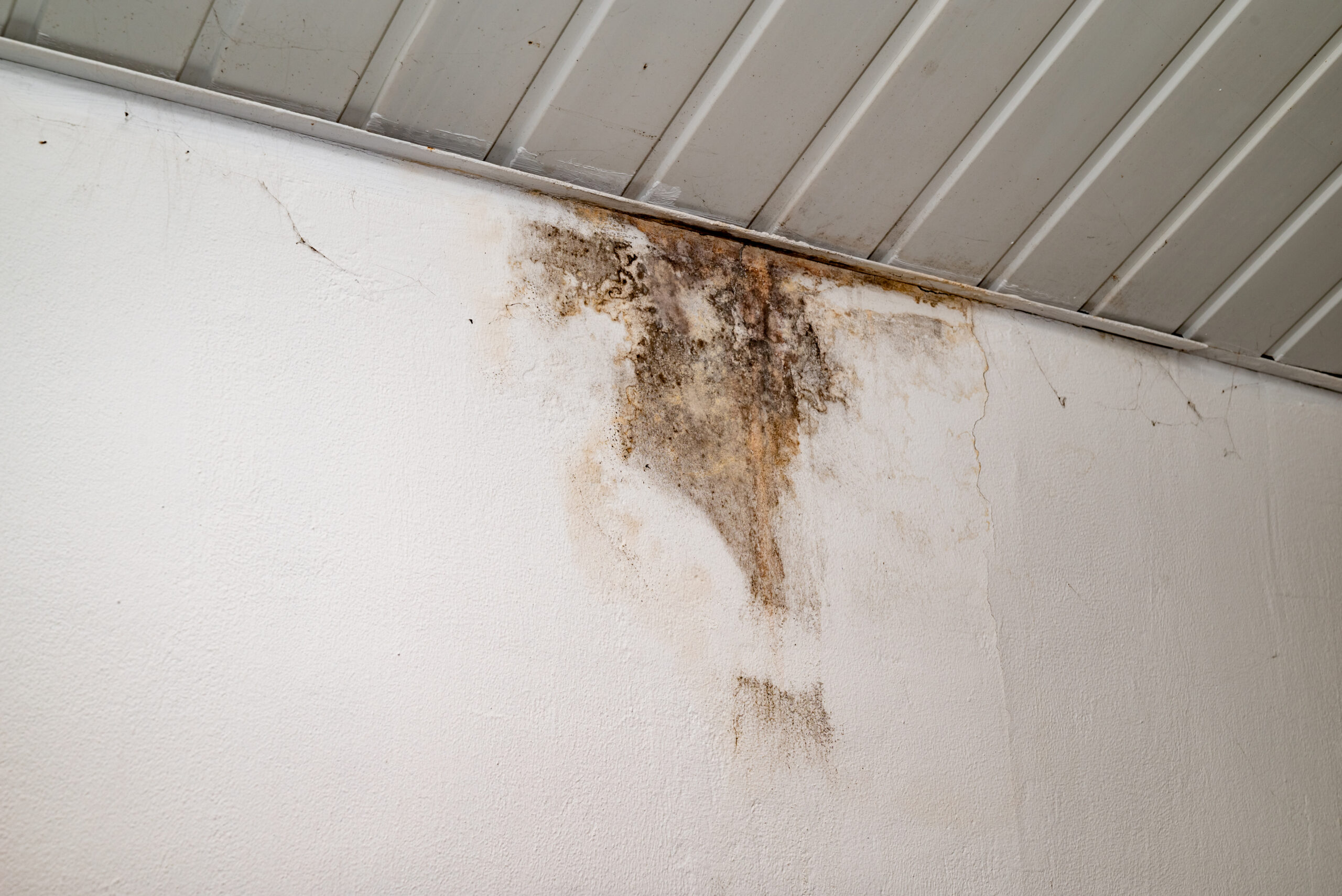
- Perform routine mold checks. At least once a month, inspect your laundry room to look for telltale signs of mold and/or water damage, including dark spots or discoloration on the walls and floors, excess condensation, water stains, and peeling or bubbling paint. Use your nose to seek out musty or unpleasant odors that could signal mold.
Don’t wait to call a mold removal expert.
Mold growth in any room of your house is a problem. In addition to the damage it can cause to the structure of your property and to your belongings, mold is a health hazard that can cause allergy symptoms and respiratory issues—affecting you and your pets.
And because a mold problem can spread fast if left untreated, smart homeowners know to call a professional at the first sign of mold. Whether the situation requires mold testing or there is clear evidence of mold growth, a no-cost consultation can put you on the right path toward a safe resolution and lasting peace of mind.
CT Mold Pros specializes in mold remediation and indoor air quality.
When Connecticut homeowners need a mold specialist they can trust, they call CT Mold Pros. Watch our team on Great Day Connecticut to find out how to safeguard your home against mold, and let us know how we can help. From laundry room mold and basement water damage to indoor air quality solutions that help you breathe easier all year long, your health and safety is our top priority.
Call CT Mold Pros today at (203) 920-0265 to schedule a free consultation, or fill out our online form with your message and a member of our team will reach out to you shortly.
.svg)