

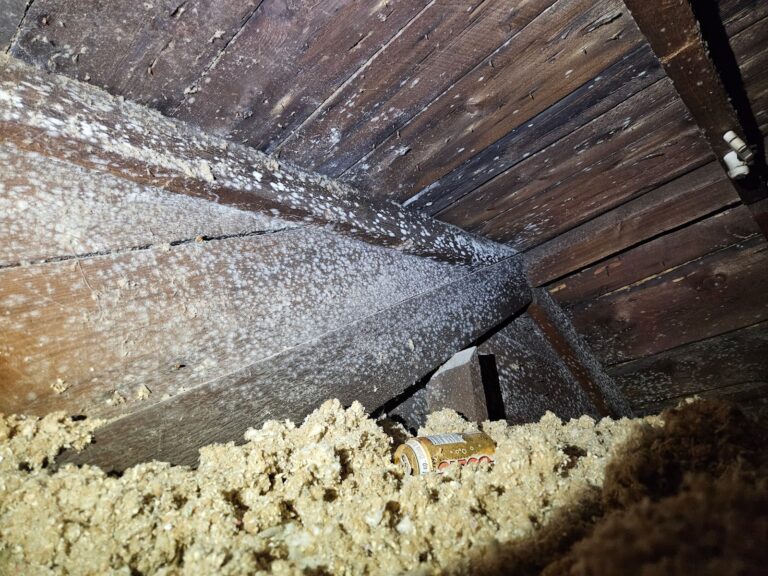
Finding mold in your attic (or anywhere else in your home) is never a pleasant experience.
However, because indoor mold growth is a common problem for Connecticut homeowners, it is important to have a basic understanding of what mold is, how to spot signs of mold indoors, and the ways in which mold exposure can be harmful to people and pets.
In response to a growing concern about white mold and whether or not it is dangerous, the experts at CT Mold Pros created this blog to help answer some of your questions and help you maintain a healthy indoor environment.
What is white mold, and where does it grow?
The most important thing to point out is that white mold does not always refer to a specific type of mold. Rather, many species of mold may appear white, and some types of mold may even change color as they mature or as the environment around them changes.
While experts at the EPA tell us there are at least 100,000 species of mold in existence today, the National Toxicology Program puts that number at closer to 1.5 million—which tells us just how extensive its reach is.
No matter where you live, there will always be trace amounts of mold in your home. Mold is a natural part of the ecosystem and thrives both indoors and out. The thing you want to avoid is allowing microscopic mold spores to collect and form colonies, which generally happens when excess moisture is present.
In moist conditions, as long as it has oxygen and a food source (preferably organic material), mold of many different types and colors can quickly start to flourish.
How does white mold differ from mildew?
Both mold and mildew are fungi that thrive where moisture is present. But regardless of their color, there are distinct differences between the two that can help make them easier to identify—mainly in how they grow and what they look like.
As far as how they grow, mold penetrates deeply into a material but mildew has shallow roots and stays on the surface. In terms of visual characteristics, mold grows in large spots or fuzzy patches, while mildew is generally powdery in appearance and often looks like a collection of very small dots.
Finally, that white substance you see in your home could be neither mold nor mildew but something called efflorescence. This is a powdery white salt deposit that gets left behind after water evaporates from the surface of brick, cement, or similar materials.
Should I be concerned about white mold?
The obvious answer is yes. All indoor mold is cause for concern because of its potential impact on your health and your belongings. If indoor mold growth has flourished to the point where it is now visible or detectable due to an odor, fast action is needed.
Exposure to different types of mold can trigger increased allergy symptoms such as coughing, sneezing, watery eyes, and trouble breathing. Even pets can be affected by indoor mold growth and may exhibit symptoms such as skin and ear issues, respiratory problems, and fatigue.
On top of that, mold growth can wreak havoc on your property, eating away at structural materials such as wood and drywall. It can also saturate carpet, upholstery, clothing, and other organic materials, leaving them unsalvageable.
How to remove white mold from your home
While smaller mold infestations can sometimes be a DIY job, it is always smart to get a professional opinion before you attempt any kind of mold treatment in your home.
An experienced mold technician can help you identify the type of mold (if indeed it is mold to begin with) and the best method of treatment, even if that means recommending the correct products to use to clean it on your own. Plus, they have the necessary equipment to determine the full scope of the problem and whether or not there is hidden mold lurking in places you may not be able to see.
Why CT Mold Pros? The proof is in the photos
Remember the earlier photo of white mold in the attic space?
The above photo is the same area after the skilled technicians at Connecticut Mold Pros stepped in to handle the problem. Our comprehensive 4-step process allows us to effectively remove mold and prevent future mold growth indoors, and we always do our best to minimize disruptions so homeowners can quickly get back to their normal routine.
Call us today at (203) 920-0265 for a free estimate or fill out our online form with your message and a member of our team will respond shortly.

.svg)